|
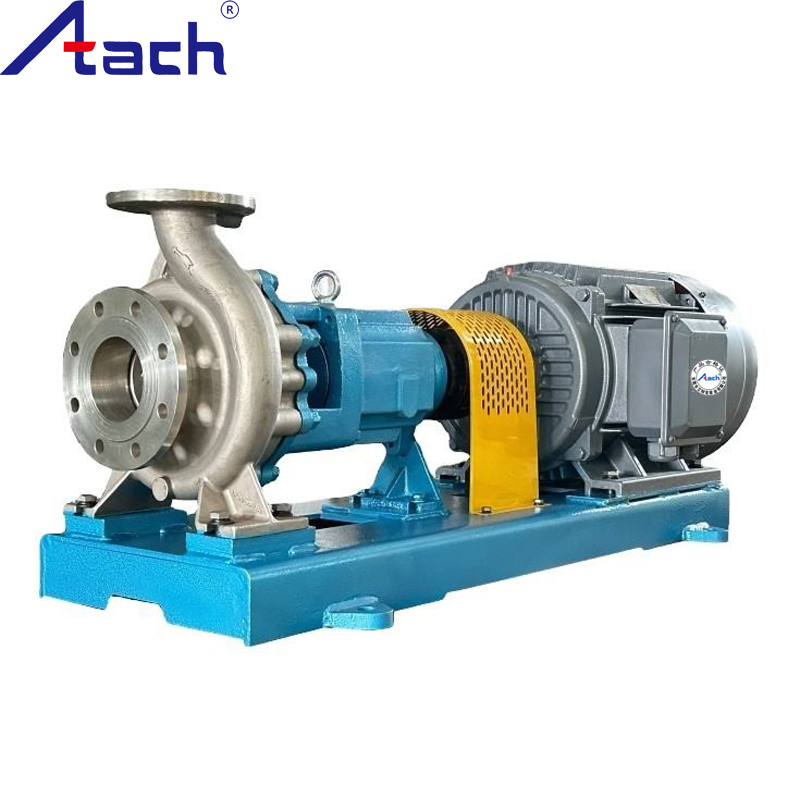
Selection of bearing types for cantilever centrifugal pump bearing boxes ?
The selection of bearing types for the cantilever centrifugal pump bearing box should be comprehensively considered based on factors such as the pump's load characteristics, rotational speed, and working environment. Common choices include deep groove ball bearings, double-row angular contact ball bearings, and single-row angular contact ball bearings. Deep groove ball bearing Applicable scenarios : Small to medium-sized cantilever centrifugal pumps, suitable for working conditions where radial loads are dominant and axial loads are relatively small. Features : Excellent high-speed performance (rotational speed up to 1,500-10,000 rpm) Low coefficient of friction (0.001-0.005), mechanical efficiency up to 99% Can withstand a speed increase of up to 70% of the rated speed (clearance needs to be increased) Double-row angular contact ball bearings Applicable scenario : Medium-load cantilever centrifugal pump, which needs to withstand both radial and axial loads simultaneously. Features : High rigidity, capable of withstanding overturning moment It is recommended to adopt C3 clearance to enhance load capacity and reduce noise Compliant with ISO355 standard and compatible with API610 specification Single row angular contact ball bearing Applicable scenarios : Medium to heavy-duty cantilever centrifugal pumps that need to withstand large combined axial and radial loads. Features : 40° contact Angle design, enhancing axial load-bearing capacity One-piece machined brass cage, with better wear resistance It is recommended to use P6 precision rolling elements to reduce temperature rise and noise Selection suggestions Load assessment : Calculate the combined radial and axial loads to match the bearing capacity. Speed matching : If the speed exceeds the rated value by 70%, the clearance should be increased or high-performance grease should be used. Sealing design : Select bearings with sealing structures (such as rubber seals or dust covers) based on the medium environment. pairing method : back-to-back or face-to-face pairing to enhance axial/radial combined support. |