|
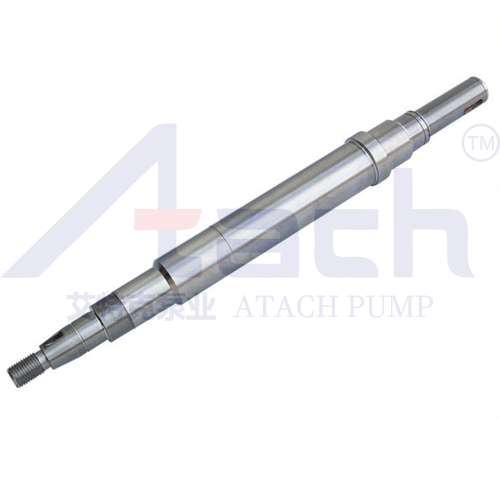
Under what circumstances will the main shaft of a chemical centrifugal pump break ?
Based on years of analysis of customer usage by ATACH Industrial Pump Factory and research on on-site feedback from customers, the following analysis and elaboration are mainly made regarding the situation of main shaft breakage in chemical centrifugal pumps: The breakage of the main shaft of a chemical centrifugal pump is usually caused by fatigue failure, design flaws, abnormal operating conditions or installation issues. The following are the specific reasons and solutions: Fatigue failure The most common cause of spindle fracture is rotational reverse bending fatigue. Long-term exposure to alternating loads (such as unbalanced, misaligned or vibrating impellers) can lead to stress concentration and eventually cause crack propagation. Design and manufacturing defects Excessive L-D ratio: In a cantilever pump, if the L3/D4 value of the shaft (where L is the distance from the impeller to the bearing and D is the shaft diameter) exceeds the design range, it will intensify the bending stress. Material or process issues: Metallurgical defects (such as porosity, improper annealing) or insufficient machining accuracy (such as keyway, fillet radius not meeting standards) may reduce the strength of the shaft. Abnormal operating conditions Fluid properties: High viscosity, high specific gravity or corrosive media will increase the frictional resistance and corrosion rate of the shaft, accelerating fatigue. Variable speed operation: Torque doubles at low speeds (for example, the torque at 875 rpm is twice that at 1750 rpm), exceeding the design of the shaft Carrying capacity. Misalignment or vibration: Slight deviation or cavitation between the drive equipment and the pump can cause bending moment, resulting in additional stress on the bearings. Installation and maintenance issues Impeller imbalance: Static balance test errors or wear of the sealing ring can cause rotor eccentricity, generating axial force. Improper installation of components: Poor fit of couplings and impellers or wear of keyways may cause fretting wear. Typical cases Grey water medium: The inlet filter screen is clogged, causing the friction pair to dry grind, and eventually the shaft is twisted off. Wear of the friction pair: Excessive clearance of the mouth ring (such as 0.77mm) intensifies vibration and accelerates shaft fatigue. preventive measure Optimization design: Control the L-D ratio to ensure that the shaft diameter matches the cantilever length. Material selection: Use high fatigue strength alloys to avoid corrosive environments. Operation monitoring: Regularly check the alignment, vibration value and impeller balance. Maintenance specifications: Avoid belt drive or operation at non-optimal efficiency points, and replace worn parts regularly. |