|
The respective advantages and disadvantages of horizontal water pumps and vertical water pumps ?
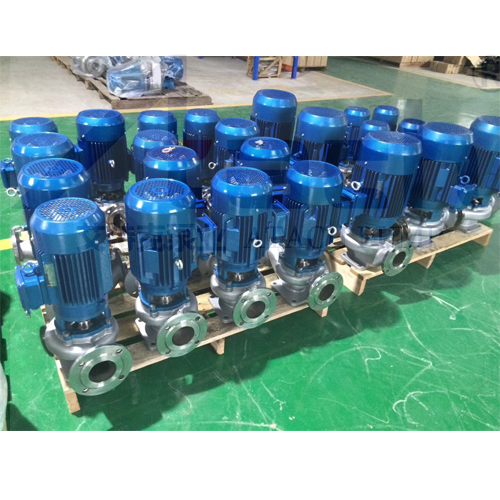
Some time ago, an old customer from the UK asked us. They were clear about the parameter requirements of the water pump, but they were confused about whether to choose the vertical or horizontal structure of the water pump. Which installation structure is more suitable? Now, ATACH Pump Industry will make an analysis and explanation: Vertical water pumps and horizontal water pumps each have their own advantages and disadvantages in terms of structure, installation, performance and maintenance. When choosing, a balance should be made based on the specific application scenario. Structural features Vertical water pump : Vertically installed, compact structure, small floor space, suitable for space-constrained occasions. However, the shaft is relatively long, so attention should be paid to vibration and stability issues during operation. Horizontal water pump : Installed horizontally, with a simple structure and convenient maintenance (for example, when inspecting the impeller, only the inlet pipe needs to be disassembled). However, it occupies a large area and requires additional foundation support. Installation and Maintenance Vertical water pump : Easy to install, can be directly connected to the pipeline, and the rotor components can be withdrawn without disassembling the pipeline. However, the maintenance is complex. To inspect the impeller, the upper components need to be removed. Horizontal water pump : Installation requires alignment and foundation adjustment. Maintenance is simple and components are easy to disassemble. It has poor self-priming ability and the gas needs to be vented before starting. Performance and Application Vertical water pump : has a relatively high head (up to 45 meters), making it suitable for deep Wells, underground tanks and other conditions where backflow is not possible. The flow rate is relatively small, and the efficiency is greatly affected by viscosity. Horizontal water pump : It has a large flow rate of and a low head of , making it suitable for high-flow transportation (such as farmland irrigation and industrial water supply). It has stable performance, but for high-lift scenarios, multi-level design is required. |