|
The difference between silicon carbide and alloy in the contact surface of mechanical seals in industrial water pumps ?
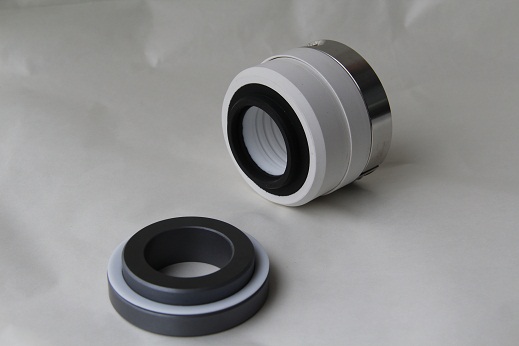
ATACH Pump Factory is often asked by customers about the grinding surfaces of mechanical seals, both silicon carbion-silicon carbide and tungsten carbion-silicon carbide, which are wear-resistant contact surfaces. What are the differences in their performance and how to choose? The selection of contact surface materials for mechanical seals in industrial water pumps needs to be balanced based on specific working conditions (such as medium properties, temperature, pressure, etc.). silicon carbide and alloy each have their advantages and disadvantages. Here are the key differences: Comparison of material properties Silicon carbide: Advantages: High hardness (second only to diamond), excellent wear resistance, strong corrosion resistance (especially to acid and salt solutions), high temperature resistance (up to 1400℃), good thermal conductivity, suitable for media containing particles or corrosive substances. Disadvantages: It is relatively brittle and prone to cracking. The cost is relatively high. 34 Alloys (such as 316 stainless steel) : advantages: Good corrosion resistance, high mechanical strength, and relatively low cost. Disadvantages: It has relatively low hardness and poor wear resistance, making it unsuitable for high-wear or high-temperature working conditions. Applicable scenarios Silicon carbide: Medium: strong acid, strong alkali, liquid containing particles or corrosive substances (such as sulfuric acid, phosphoric acid, chlor-alkali industrial medium). Working conditions: High-temperature, high-pressure, and high-wear environment. 15 Alloy: Medium: General corrosive liquids (such as clear water, weak acids and alkalis). Operating conditions: Conventional operating conditions, with no high requirement for wear resistance. Maintenance and Cost Silicon carbide: It has a longer lifespan and a longer maintenance cycle, but its initial cost is higher. Alloy: Lower cost, but needs to be replaced more frequently. |