|
Why is it necessary to use a dial indicator when connecting a split-type chemical pump to a motor ?
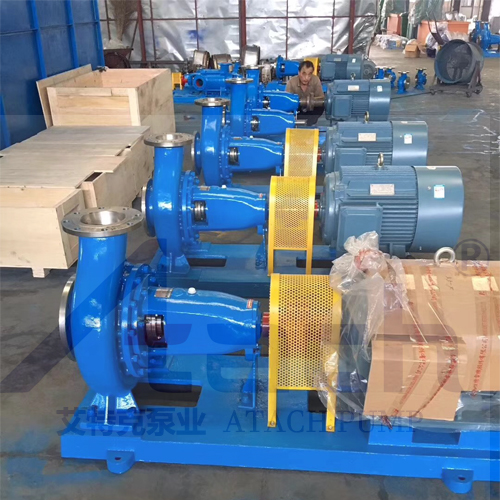
Many customers of ATACH Pump Industry order chemical centrifugal pumps without motors and bare shaft parts. Therefore, after receiving the pumps, the motors held by the customers themselves need to be coupled and connected to the ATACH bare shaft pumps. Now, we will explain the connection requirements and precautions as follows: When connecting the motor of a split-type chemical pump, a dial indicator is used to ensure the shaft alignment accuracy of the coupling, avoiding mechanical stress, vibration or equipment damage caused by misalignment. The following are the specific reasons and key points of operation: The necessity of axis alignment The rotating shafts of the pump and the motor must be strictly aligned; otherwise, it will lead to: The coupling is subjected to excessive torque and radial force, accelerating wear. The bearings, seals and other components failed prematurely due to vibration. The overall operational efficiency of the equipment has declined, and it may even cause malfunctions. The function of a dial indicator The dial indicator is used to measure the radial runout and end face runout of the shaft, specifically including: detection deviation : Determine the parallelism or angular deviation between the pump shaft and the motor shaft through the reading of the dial indicator; Adjust position : based on the measurement results, add/remove gaskets or adjust the height of the base to make the two shafts reach the tolerance range "Correct alignment;" Verification accuracy : After adjustment, repeated measurements are required to ensure that the deviation values meet the requirements of the equipment manufacturer (typically radial deviation ≤0.05mm, axial deviation ≤0.02mm). Operation steps Initial inspection: Confirm that the pump and motor are undamaged and that the coupling is in good condition. Rough alignment: Use the laser alignment tool or manually adjust to reduce the initial deviation; Precision measurement: Use a dial indicator to measure shaft runout in both horizontal and vertical directions. Fine-tuning: Adjust the motor position through gaskets or bolts to eliminate deviations. Final verification: Repeat the measurement and confirm that the deviation is within the allowable range. Precautions Thermal expansion compensation: The influence of temperature changes during equipment operation on shaft displacement needs to be considered. Tool calibration: The dial indicator needs to be calibrated regularly to ensure measurement accuracy. Firmly fixed: After adjustment, the bolts must be tightened to prevent loosening during operation. |