|
Why is it necessary to turn the centrifugal pump, self-priming pump or pipeline pump by hand before starting it ?
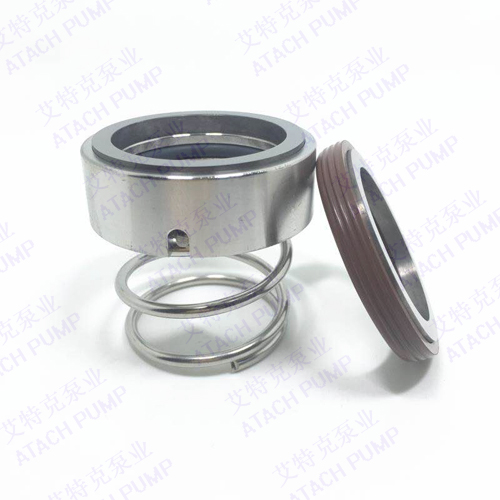
Some customers directly powered on and used the new water pumps from ATACH after receiving them, and then approached our after-sales department, saying that the mechanical seal was leaking. Now we will specifically analyze the reasons as follows: Every water pump of ATACH is tested with water on a test bench before leaving the factory. As a result, a water film will form on the contact surface of the mechanical seal, especially between the contact surfaces of silicon carbide. If the machine is started directly by hand before startup, the water film between the contact surfaces of the mechanical seal will be sucked tight, which will directly cause the rubber part or other components of the seal to be damaged, resulting in seal failure. Before starting centrifugal pumps, self-priming pumps and pipeline pumps, turning them by hand is mainly to ensure the safe and reliable operation of the equipment and avoid damage caused by mechanical failures or abnormal conditions during startup. Turning the motor by hand refers to manually rotating the pump shaft several times before starting the motor to check the condition of the rotating parts. The main purposes of turning the wheel include: 1.Check whether the pump shaft rotates smoothly : Turning the pump by hand can help detect in advance whether there is any jamming, foreign objects or abnormal friction in the internal components of the pump (such as the impeller and bearings), avoiding equipment damage or motor overload caused by excessive resistance during startup. 2.Prevent motor burnout : Especially for pumps transporting high freezing point (such as high-temperature oil products) or high viscosity media, if the medium inside the pump solidifies after the machine stops, it may cause the impeller to stick to the pump casing. If the motor is not turned by hand during startup, the starting load will be too large, exceeding the rated current and easily burning out the motor. 3.Ensure uniform lubrication : For pumps that have been out of use for a long time, the lubricating oil on friction surfaces such as bearings may sink or be unevenly distributed. Turning the machine by hand can make the lubricating oil evenly cover the friction surface again, form an oil film, and reduce dry friction and wear during startup. 4.Expel gas and prevent gas binding: If there is air inside the pump, an effective vacuum may not be formed after startup, resulting in the inability to draw in liquid (i.e., the gas binding phenomenon). Turning the pump by hand helps to assist in discharging the gas in the pump chamber and ensures that the pump body is filled with liquid. 5.Prevent pump shaft deformation : When a standby pump is left idle for a long time, the rotor may bend due to its own weight or thermal stress. Regular turning of the rotor can change the force-bearing position of the rotor, prevent local deformation, and ensure good alignment of the shaft system during startup. 6.Check the mechanical seal and connecting parts : When turning the machine by hand, observe whether the leakage of the mechanical seal increases or whether the connection of the coupling is loose, and discover potential problems in time. Supplementary explanations for different types of pumps: centrifugal pump : The key point of turning the impeller is to check the gap between the impeller and the pump casing as well as the lubrication condition, especially suitable for fields transporting media with high freezing points all right. self-priming pump : As the self-priming pump needs to create a vacuum to draw liquid, turning the pump by hand helps ensure that there is no air residue in the pump cavity and improves the self-priming efficiency. pipeline pump : As a direct-coupled pump, turning the pump by hand can check the alignment of the pump and the motor, avoiding vibration or jamming during startup. In conclusion, turning the machine by hand is a simple yet crucial preventive operation that can significantly reduce start-up risks and extend the service life of equipment. In actual operation, the equipment regulations should be followed to ensure that the turning is smooth and free of abnormalities before starting.
|