|
The main differences between centrifugal pumps and pipeline pumps
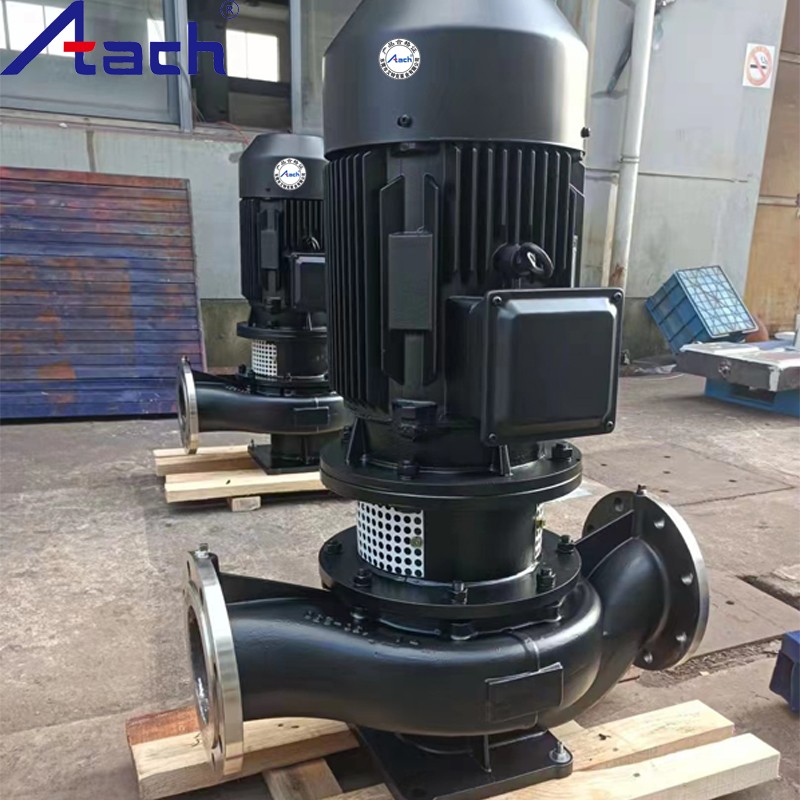
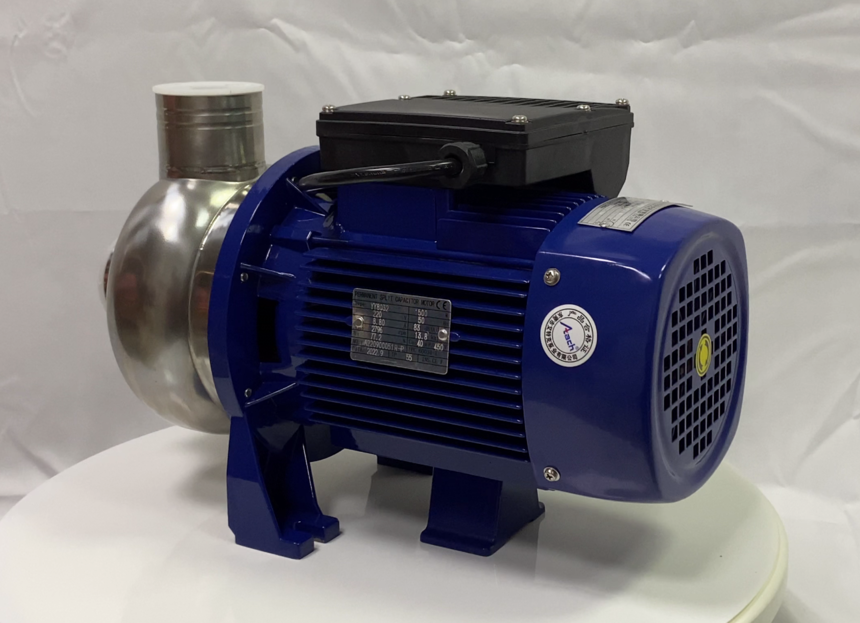
Pipeline pumps usually are called pipeline centrifugal pumps. In terms of the name, they belong to the category of centrifugal pumps. But are they really exactly the same as centrifugal pumps ? Pipeline pumps are essentially a subcategory of centrifugal pumps. The two are in a "subordinate relationship" rather than a "parallel relationship" - all pipeline pumps belong to centrifugal pumps, but not all centrifugal pumps are pipeline pumps. The core differences between the two are concentrated in three dimensions: structural design, installation methods, and applicable scenarios. The specific distinctions are as follows. A. Differences in Core Definitions and Design Logic Centrifugal pump (General type) Centrifugal pumps are general-purpose pumps that operate based on "centrifugal force", and their design logic is "versatility suitable for multiple scenarios". Its core structure includes a volute pump body, impeller, pump shaft, motor, etc. The inlet and outlet of the pump body are usually arranged in a "vertical or vertical Angle" layout (such as the common horizontal centrifugal pump, with the inlet horizontal and the outlet vertically upward), and a base needs to be attached to the bottom of the pump body for fixation. Its design is not limited to a certain type of installation environment. By adjusting the inlet and outlet directions, motor power, and impeller material, it can adapt to different flow and head requirements. It is the most widely used "basic model" of pumps in both industrial and civil fields. B. Pipeline Pump (Special Type) The pipeline pump is a centrifugal pump specially designed for "pipeline series installation", with the design logic being "the convenience of integrating into the pipeline". Its core feature is that the inlet and outlet diameters are the same and on the same straight line (commonly known as "axial inlet and outlet"). The pump body does not require an independent base and can be directly connected in series in horizontal or vertical pipelines, equivalent to an "extension of a section" of the pipeline. To adapt to pipeline installation, pipeline pumps usually adopt a compact structure (with the motor and pump body integrated), being smaller in size and lighter in weight. Some models also come with flanges that can be directly connected to the pipeline flange, eliminating the need for additional pipeline diameter reducing or turning accessories. Ii. Differences in Installation Methods and space Requirements This is the most intuitive difference between the two, which directly determines the applicable installation scenarios: 1. Centrifugal pump: It needs to be independently fixed and occupies a large space - Installation requirements: It must be fixed to the ground, support or concrete foundation through the base to prevent displacement caused by vibration during operation. The inlet and outlet need to be connected to the main pipeline through elbow pipes and reducers, and the pipeline layout is rather complex. - Space requirements: It is necessary to reserve "installation space for the pump body + maintenance operation space". For example, for a DN100 horizontal centrifugal pump, including the base and the front and rear pipelines, at least 1.5m×0.8m of ground space should be occupied. Typical scenarios: Circulating water systems in factory workshops, fire pump rooms in high-rise buildings (usually multiple centrifugal pumps are centrally arranged with dedicated machine rooms). 2. Pipeline pump: It can be connected in series with pipelines and occupies a small space - Installation requirements: No base is required. It can be directly connected in series in the pipeline, and the inlet and outlet should match the pipe diameter (for example, a DN50 pipeline pump can be directly connected to a DN50 main pipeline). The pipeline does not need additional turning or diameter change. During installation, it is only necessary to ensure that the flange is tightly sealed. - Space requirements: Only "linear space" for pipe extension is needed, such as installation in pipes pre-embedded in the wall, without the need to occupy additional floor or machine room space. Typical scenarios: The circulation pipes of household wall-hung boilers, the refrigerant delivery pipes of commercial air conditioners, and the pressure increase of branch pipes for secondary water supply in residential areas. For example: Small commercial businesses (such as convenience stores, small restaurants) Recommended pump type: Pipeline pump - Applicable scenarios: Kitchen water supply and drainage pressurization, air conditioning terminal circulating water delivery. Key points for selection: Choose a pipeline pump with flange connection (which has better sealing performance than threaded connection and is suitable for long-term use), with a flow rate of 20-50m³/h and a head of 30-40m. The material should preferably be 304 stainless steel (resistant to corrosion by tap water, avoiding rust and water quality pollution). Iii. Differences in Performance Parameters and Applicable Scenarios 1. Flow and Head: General vs. Precise Centrifugal pumps: They have a wide range of flow rates (typically 1-1000m³/h) and a large head span (5-200m ³). By replacing the impeller and adjusting the rotational speed, they can meet different requirements. They are suitable for centralized transportation scenarios with "high flow and high head", such as cooling water circulation in factories and water transmission systems in urban water supply plants. - Pipeline pumps: Their flow rate and head are relatively limited (typically flow rate ≤100m³/h, head ≤50m), and their performance parameters are more focused on "medium and small flow pressure increase within pipelines". They are suitable for local pressure increase scenarios with "small flow and low head", such as pressure increase for the inlet water pipes of high-rise residential buildings and water supply and drainage pipes in commercial kitchens. 2. Medium adaptability: Broad-spectrum vs. conventional Centrifugal pumps: By choosing special materials (such as stainless steel, fluorine-lined), they can be adapted to corrosive media (such as acid and alkali solutions) and media containing particles (such as sewage), for example, corrosion-resistant centrifugal pumps in the chemical industry and sewage centrifugal pumps in sewage treatment plants. - Pipeline pumps: The materials are mostly cast iron and ordinary stainless steel. They are mainly suitable for conventional media such as clean water, tap water, and antifreeze that are "clean, free of particles, and not strongly corrosive". They are not suitable for media containing impurities or corrosive substances. 3. Operational stability: Strong vibration vs. Low vibration Centrifugal pumps: Due to their relatively complex structure (such as volute pump bodies and long shafts), they generate significant vibration and noise during operation. Optimization measures such as base shock absorption and the installation of sound insulation covers are necessary. They are typically installed in machine rooms far from living areas. - Pipeline pump: Compact structure (motor and pump body on the same axis), low vibration and noise during operation, and can be directly installed in indoor pipelines (such as in the ceilings of household kitchens and bathrooms) without additional shock absorption measures. Iv. Summary: How to Quickly Select the Right Pump? 1. Consider the installation scenario: If there is a dedicated machine room and a large flow rate is required for transportation, choose a centrifugal pump. If it needs to be connected in series in the existing pipeline and the space is limited, a pipeline pump should be selected. 2. Consider performance requirements: If high head (> 50m), large flow rate (> 100m³/h), or the transportation of special media is needed, choose a centrifugal pump. If only local pressurization and clean water transportation are required, a pipeline pump should be selected. 3. Consider the usage environment: If sensitive to vibration and noise (such as indoors or in living areas), choose a pipeline pump. If it is installed outdoors or in a machine room and the noise requirement is low, a centrifugal pump should be selected. In simple terms, centrifugal pumps are "all-rounders", suitable for large-scale and complex scenarios. The pipeline pump is a "specialist in pipelines", suitable for small-scale and convenient pipeline pressurization requirements. Summary description of ATACH Pump Industry Centrifugal pumps and pipeline pumps have a subordinate relationship: pipeline pumps are a subcategory of centrifugal pumps, and all pipeline pumps fall under the category of centrifugal pumps, but not all centrifugal pumps are pipeline pumps. The core connection between the two is that they both operate by centrifugal force. The difference lies in the design positioning - centrifugal pumps focus on universality and are suitable for multiple scenarios with large flow and high head requirements. |