|
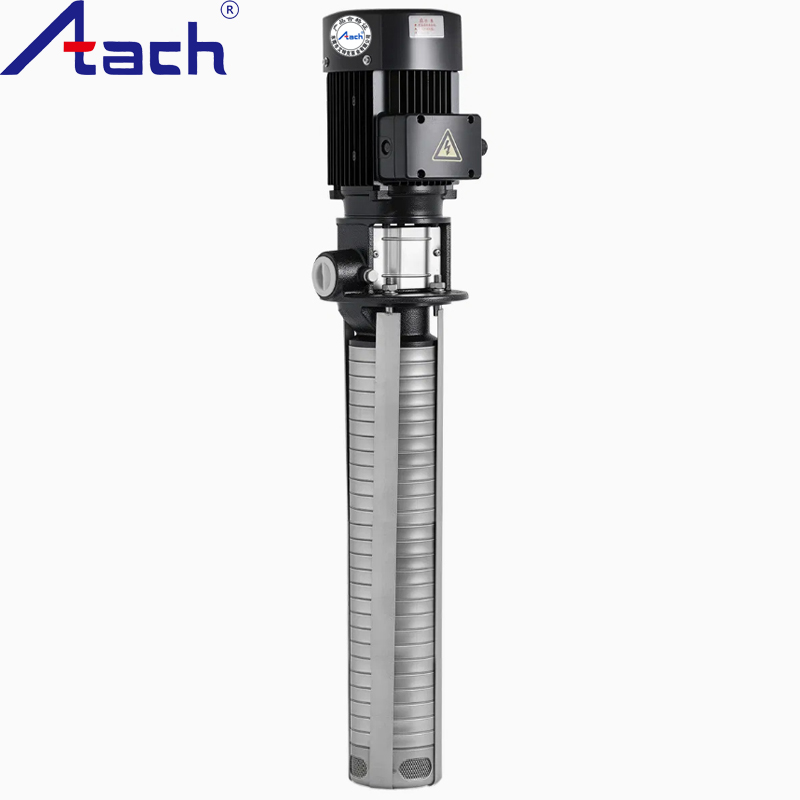
Why does the Chinese ATACH Industrial Water Pump Factory always say that before starting a three-phase water pump, it is necessary to confirm the forward and reverse directions?
Regarding the statement made by "China ATACH Industrial Water Pump Factory" that three-phase water pumps must confirm the rotation direction before starting, according to the general technical principles and relevant materials in the water pump industry, it is crucial to confirm the rotation direction of three-phase water pumps before starting. The main reasons are as follows: • To ensure normal working performance: For three-phase asynchronous motors-driven water pumps, the rotation direction of the impeller directly determines the direction and efficiency of water flow. When running in the forward direction, the pump can operate normally according to the designed head and flow rate; if running in the reverse direction, the flow rate and head will significantly decrease, unable to meet the system requirements. • To prevent equipment damage: For some water pumps (such as multi-stage pumps or specific types of centrifugal pumps), running in the reverse direction may cause abnormal stress or wear on internal components such as the impeller, shaft sleeve, and mechanical seal. Long-term operation will accelerate equipment aging and even cause irreversible damage. • To avoid system failures: In a circulation system (such as air conditioning or heating), running the pump in the reverse direction will disrupt the balance of the entire hydraulic circulation, resulting in low system efficiency, increased energy consumption, and even triggering protection devices to shut down (such as overload). "Reverse connection of three-phase power supply" can cause the pump motor to fail to start or operate abnormally, and it provides methods to determine the forward and reverse rotation by measuring the current, observing the wind direction, or checking the arrow on the casing. The "ATACH" pump manufacturing company, whose products cover various industrial pumps, has such requirements. Therefore, this is a common safety and operation standard in the pump industry. In actual operation, one should follow the direction arrow indicated on the pump's nameplate or the product manual for confirmation. |