|
The influence of NPSH(r) on the centrifugal pumps of China ATACH Industrial Pump Factory
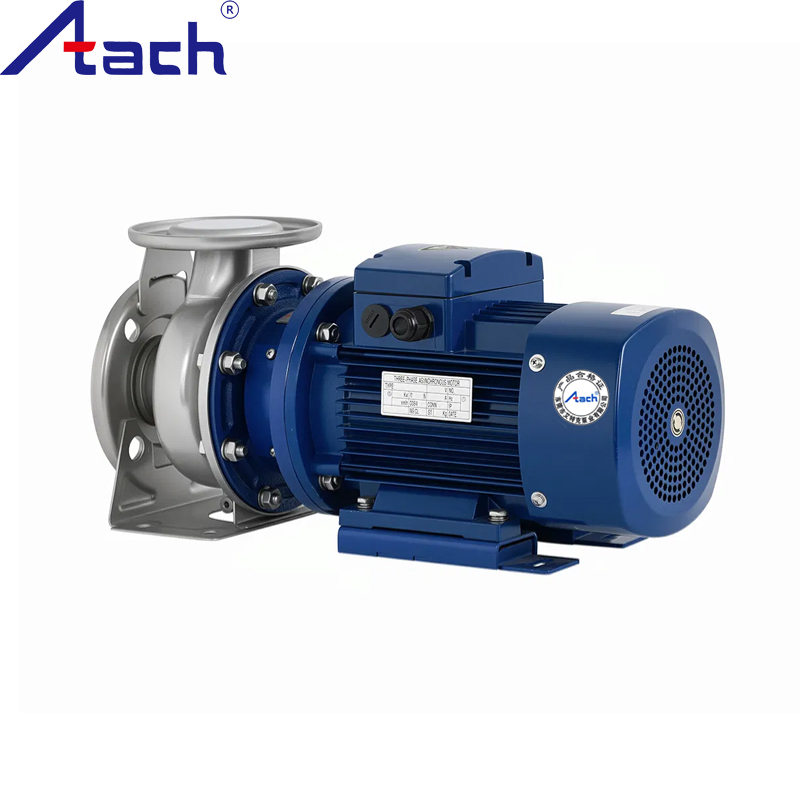
When customers choose the centrifugal pump products from ATACH Chinese Industrial Pump Factory, they need to consider the NPSH(r) value for the pump usage. Otherwise, it is impossible to ensure that the pump can operate efficiently and safely. So, how significant is the impact of NPSH(r) on the pump's usage? NPSH(r), also known as the Required Net Positive Suction Head, is a key parameter for evaluating the anti-erosion performance of a pump. It has a direct impact on the stability and lifespan of the centrifugal pump. • Definition and Function: NPSH(r) refers to the pressure drop that the liquid must overcome from the pump suction inlet to the lowest point within the impeller (usually near the impeller inlet). This value represents the minimum inlet pressure required for the pump to operate safely under a specific flow rate, to prevent the occurrence of cavitation. In simple terms, the smaller the NPSH(r), the lower the inlet pressure required for the pump to operate normally, indicating a stronger anti-cavitation ability of the pump. • Impact on Pump Performance: Cavitation Prevention: When the available cavitation head (NPSHa) of the pump installation is greater than or equal to NPSH(r), the pump can operate safely. If NPSHa is less than NPSH(r), the pressure at the pump inlet will be lower than the saturation vapor pressure of the liquid, causing the liquid to vaporize and form bubbles. These bubbles, as they flow to the high-pressure area, rapidly collapse, generating intense hydraulic shock, which can lead to cavitation. Performance Degradation: When cavitation occurs, the formation and collapse of bubbles interfere with the normal flow of the liquid, resulting in a significant decrease in the pump's head, flow rate, and efficiency. Manufacturers typically define NPSH(r) as the cavitation head value (referred to as NPSH3) when the pump's head drops by 3%. Mechanical Damage: The high-frequency (up to 2000–3000 Hz) and high-pressure impact generated by the collapse of bubbles will continuously strike the metal surfaces of the impeller, pump casing, etc., causing fatigue erosion of the material. If the bubbles contain active gases such as oxygen, electrochemical corrosion will occur at local high temperatures (up to 200–300°C), further accelerating component damage. • Significance of Design and Selection: When choosing and installing a pump, it is necessary to ensure that the system's NPSHa is greater than the pump's NPSH(r), and leave an appropriate safety margin (usually 1.1 to 1.5 times NPSH(r)) to cope with operational fluctuations and ensure the pump operates stably, reliably, and efficiently for a long time. |